How Enterprise Architecture Aligns Business and ICT
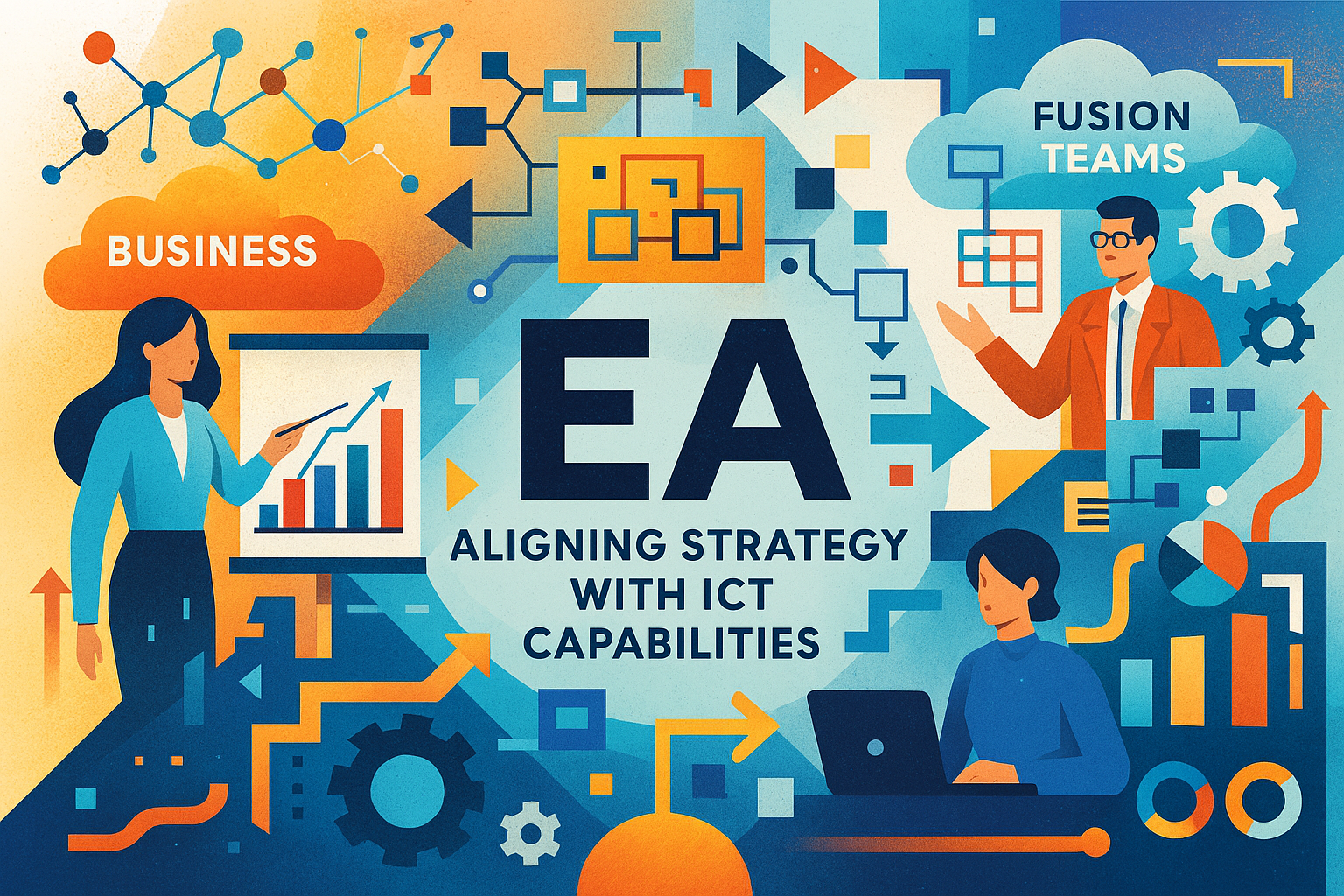
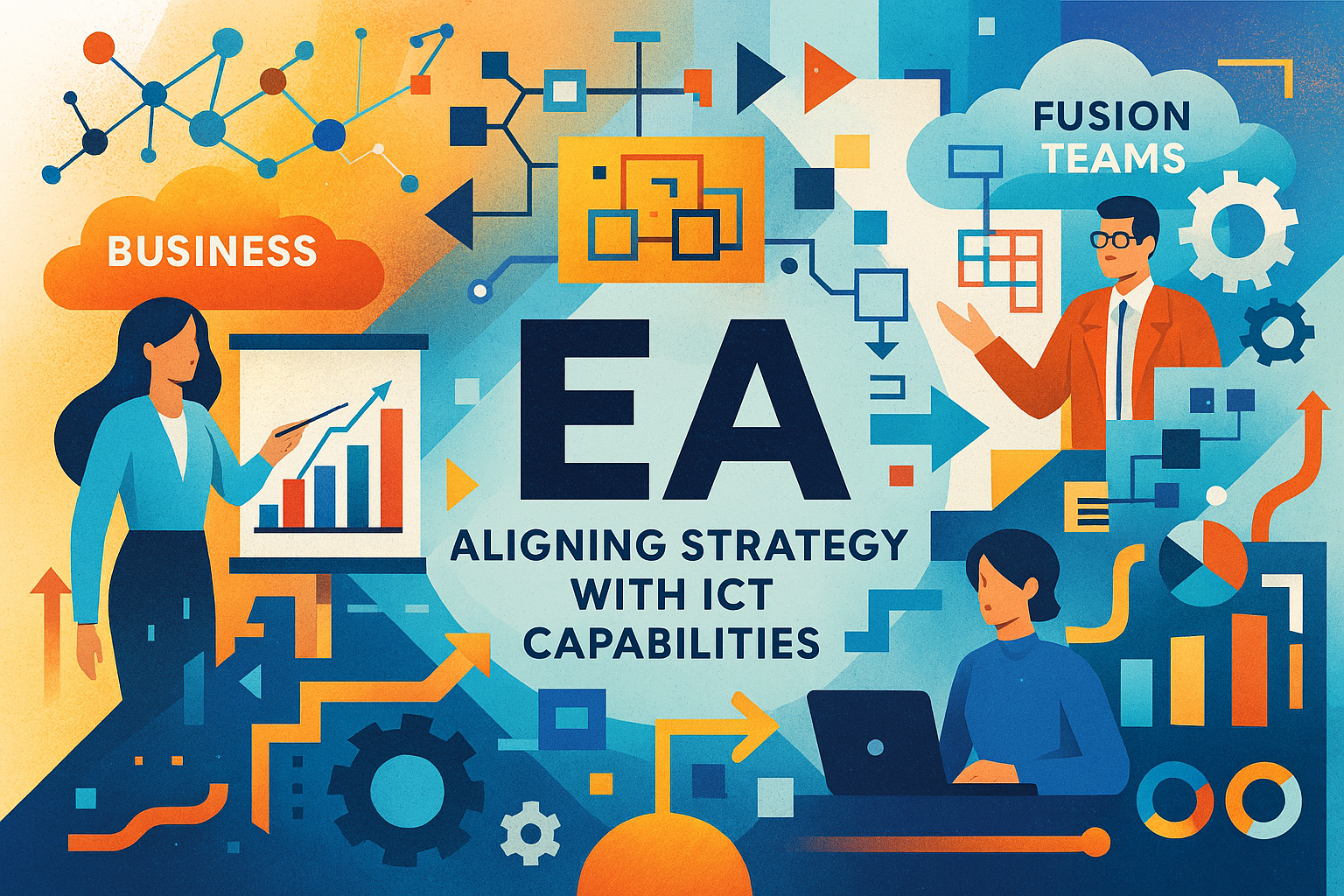
In a world where digital transformation is both a strategic imperative and a competitive necessity, organizations must bridge the gap between business ambition and technological execution. This is where Enterprise Architecture (EA) steps in—not as a technical afterthought, but as a strategic enabler that harmonizes business goals with ICT capabilities.
Why Alignment Matters
When business and ICT operate in silos, organizations face fragmented systems, misaligned investments, and sluggish innovation. EA provides the connective framework that ensures every technology decision supports enterprise strategy. It translates vision into action by defining future-state architectures, guiding modernization, and enabling performance measurement.
Architecting the Future
EA leaders begin by designing architectures that reflect the organization’s strategic priorities. This means engaging with CIOs, CEOs, and business stakeholders to understand where the enterprise is headed—and ensuring that technology platforms, data ecosystems, and digital capabilities are built to support that direction. Emerging technologies like AI, modular platforms, and integrated analytics are no longer optional—they’re foundational.
Orchestrating Modernization
Modernization isn’t just about upgrading systems—it’s about transforming how the business operates. EA plays a critical role in guiding this transformation through adaptive governance, stakeholder engagement, and coordinated decision-making. By tailoring governance models to business maturity and agility, EA ensures that innovation doesn’t outpace control.
Enhancing EA Performance
To deliver real value, EA must evolve beyond technical deliverables. Success is measured by how well EA enables strategic decisions, not by how many reference models are produced. This requires a robust talent strategy—one that cultivates business fluency, architectural innovation, and influencing skills. Agile learning, architectural coaching, and competency models are key to building high-performing teams.
Accelerating Delivery with MVA
As digital delivery becomes democratized across business units, EA must empower fusion teams with actionable guidance. The Minimum Viable Architecture (MVA) approach offers a lean, practical subset of reference architecture—principles, standards, patterns, and reusable code—that helps non-technical teams build secure, scalable solutions without compromising governance.
Measuring and Communicating Value
EA’s impact must be visible. By defining metrics that link architecture initiatives to business outcomes, EA helps CIOs demonstrate IT’s strategic value. Storytelling, stakeholder personas, and visual tools are essential to communicate how architectural decisions drive performance, reduce risk, and enable growth.
EA as Internal Consultancy
To truly align ICT with business, EA must operate as an internal management consultancy—guiding investment decisions, shaping operating models, and enabling transformation. This shift demands a compelling value proposition, consulting-style engagement, and strategic storytelling to secure buy-in and mandate.
Final Thought
Enterprise Architecture is no longer just about systems—it’s about strategy. By aligning business and ICT, EA empowers organizations to navigate complexity, seize opportunity, and deliver sustainable value. For leaders ready to elevate their impact, EA is the bridge between ambition and achievement.